Address
304 North Cardinal
St. Dorchester Center, MA 02124
Work Hours
Monday to Friday: 7AM - 7PM
Weekend: 10AM - 5PM
Address
304 North Cardinal
St. Dorchester Center, MA 02124
Work Hours
Monday to Friday: 7AM - 7PM
Weekend: 10AM - 5PM
Introduction
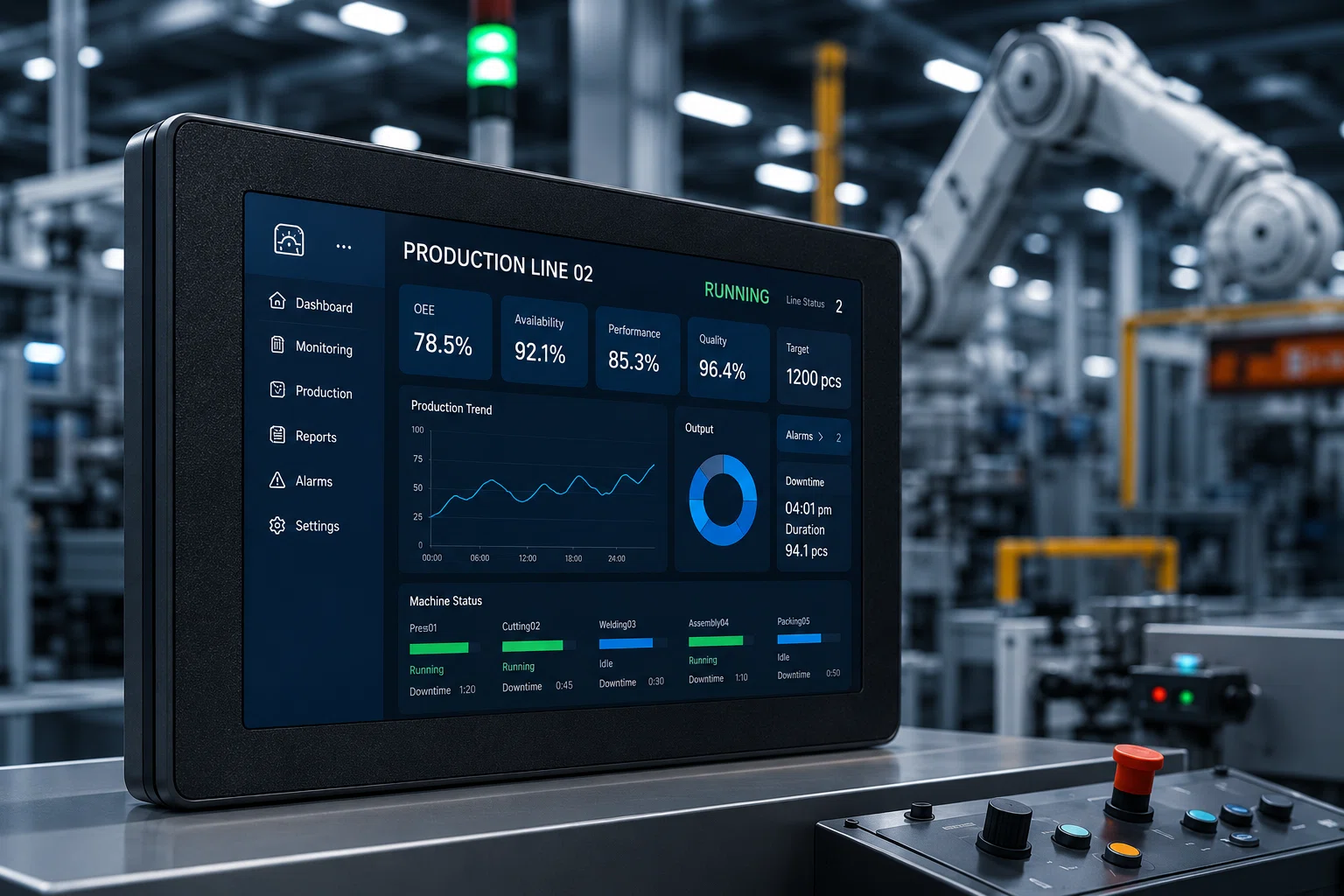
Choosing the right industrial panel PC is an important decision for manufacturing facilities, automation systems, machine builders, and industrial control applications. Unlike commercial computers, industrial panel PCs are designed for long-term operation in demanding environments where dust, vibration, temperature fluctuations, and continuous workloads are common.
Selecting the wrong system can lead to reduced efficiency, unexpected downtime, and increased maintenance costs. Understanding your project requirements before making a decision can help ensure long-term performance and reliability.
This guide outlines the key factors you should consider when choosing an industrial panel PC for your project.
1. Understand Your Application Requirements
Before evaluating hardware specifications, clearly define how the industrial panel PC will be used.
Questions to consider:
Different applications require different performance levels.
For example:
Simple HMI applications:
Advanced AI or machine vision applications:
Identifying these requirements early helps avoid over-specification or under-specification.
2. Consider Processing Performance
Processor selection directly affects system speed and future scalability.
Typical processor options include:
Entry-level applications
Suitable for:
Features:
Mid-level applications
Suitable for:
Features:
High-performance applications
Suitable for:
Features:
Consider future expansion as well. Choosing a slightly higher specification today can reduce upgrade costs later.
3. Evaluate Environmental Conditions
Industrial environments are often harsh compared with office environments.
Important environmental factors include:
Temperature
Industrial systems may operate in:
Wide-temperature designs improve stability.
Example:
Dust and Moisture Protection
Dust and water exposure can damage internal components.
Recommended protection ratings:
Shock and Vibration Resistance
Applications involving:
often require enhanced shock resistance.
4. Select the Right Display Size and Resolution
Display size affects usability and operator efficiency.
Common display sizes include:
| Application | Recommended Size |
| Small machine interfaces | 7–10 inch |
| Standard HMI systems | 12–15 inch |
| Industrial workstations | 15–21 inch |
| Monitoring stations | 21–32 inch |
Also consider:
Higher brightness displays are especially useful for outdoor applications.
5. Choose the Appropriate Touch Technology
Touch functionality plays a critical role in industrial environments.
Capacitive Touch
Advantages:
Best for:
Resistive Touch
Advantages:
Best for:
Selecting the correct touch technology improves productivity and user experience.
6. Review I/O Connectivity Requirements
Industrial applications often require multiple interfaces.
Typical interfaces include:
Consider both current and future device connectivity.
For example, your system may need to connect to:
Insufficient I/O options may limit system flexibility.
7. Fanless Design for Improved Reliability
Traditional cooling fans can attract dust and eventually fail.
Fanless industrial panel PCs offer several advantages:
For industrial environments, fanless systems are often preferred.
8. Consider OEM and ODM Customization Options
Many industrial projects require customized solutions.
Common customization services include:
OEM and ODM flexibility allows businesses to create solutions tailored to specific market requirements.
9. Long-Term Supply and Technical Support
Industrial equipment usually has a much longer life cycle than consumer electronics.
Important considerations:
Reliable long-term support reduces operational risk.
Conclusion
Selecting the right industrial panel PC requires balancing performance, reliability, environmental protection, connectivity, and future scalability.
The best solution is not necessarily the most powerful system; it is the one that matches your application’s real requirements while ensuring long-term stability and cost efficiency.
By carefully evaluating these factors, businesses can improve operational efficiency, reduce downtime, and build more reliable industrial systems.
Looking for customized industrial panel PC solutions for your project?
Contact our team for OEM/ODM services and professional industrial computing solutions tailored to your application requirements.
Shanghai Sembom Technology Co.,Ltd
E-mail:Cathy@sembom.com


