Address
304 North Cardinal
St. Dorchester Center, MA 02124
Work Hours
Monday to Friday: 7AM - 7PM
Weekend: 10AM - 5PM
Address
304 North Cardinal
St. Dorchester Center, MA 02124
Work Hours
Monday to Friday: 7AM - 7PM
Weekend: 10AM - 5PM
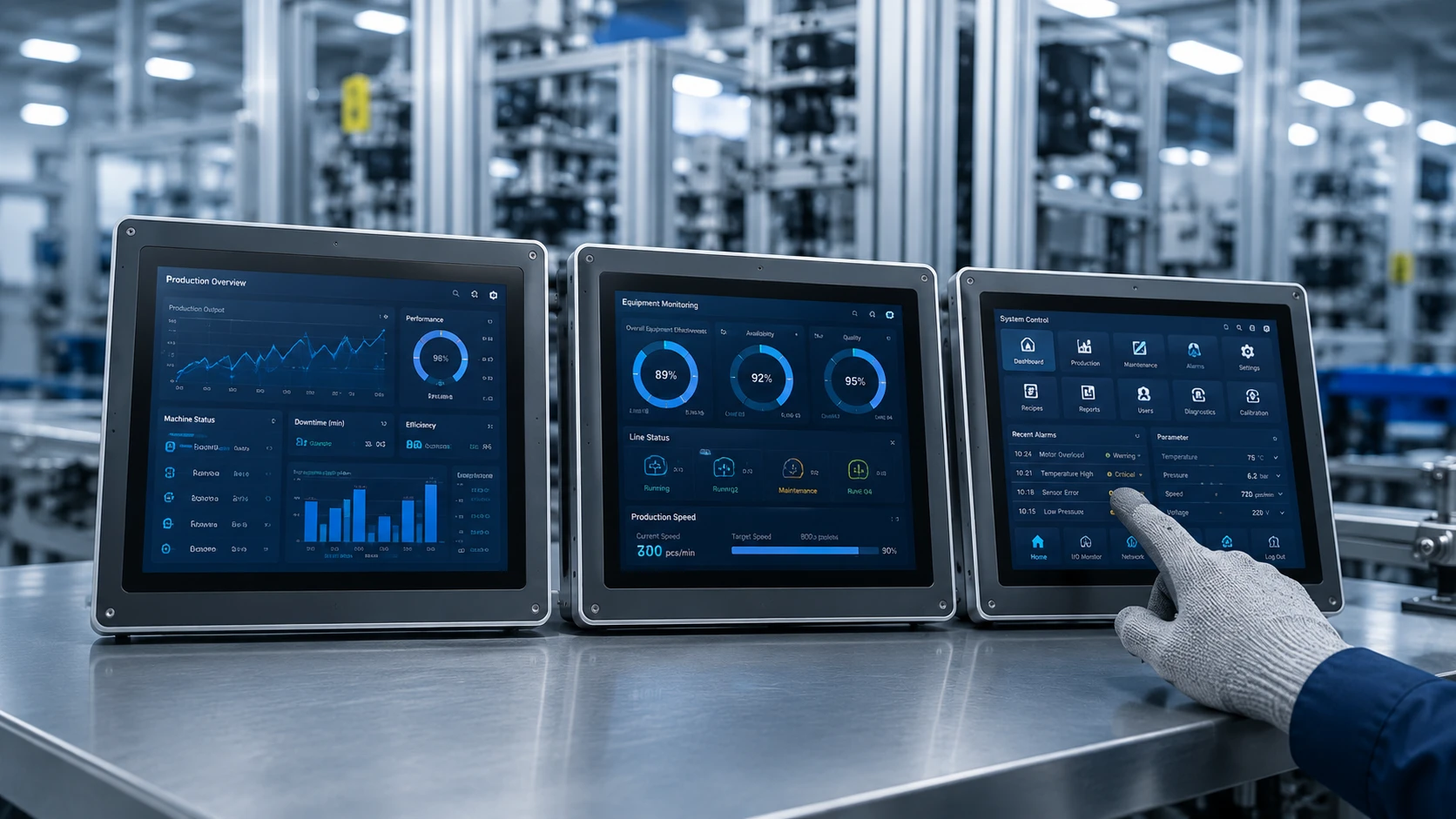
Touchscreen technology has become an essential component of modern industrial displays. From factory automation and machine control systems to self-service kiosks and smart manufacturing environments, industrial touchscreens provide operators with intuitive and efficient interaction.
However, not all touch technologies are created equal. Selecting the wrong touchscreen can result in reduced productivity, operational difficulties, and increased maintenance costs.
Factors such as environmental conditions, user interaction, glove operation, durability requirements, and budget all play important roles in determining the best solution.
This guide explains the most common industrial touchscreen technologies and helps you choose the right one for your application.
Industrial displays often operate in environments that are far more demanding than typical commercial settings.
Common challenges include:
Choosing the appropriate touch technology ensures:
Understanding the strengths and limitations of each technology is the first step toward making the right decision.
Resistive touchscreens have been widely used in industrial applications for many years.
A resistive touchscreen consists of two conductive layers separated by a small gap.
When pressure is applied to the screen, the layers make contact, allowing the system to determine the touch location.
Resistive touch remains a reliable solution for many traditional industrial applications.
Projected Capacitive Touch (PCAP) has become the most popular touchscreen technology in modern industrial displays.
PCAP technology detects changes in an electrostatic field when a conductive object, such as a finger, touches the screen.
As Industry 4.0 continues to evolve, PCAP has become the preferred choice for many modern industrial applications.
Infrared touchscreens use invisible infrared light beams arranged around the screen surface.
When an object interrupts the infrared beams, the system identifies the touch location.
IR technology is commonly used when large-format touch displays are required.
Optical touchscreens use cameras or optical sensors positioned around the display.
The sensors detect touch points by tracking interruptions or reflections.
Selecting the right touchscreen depends on several factors.
Consider whether the display will be exposed to:
For harsh environments, resistive touch or industrial-grade PCAP solutions are often recommended.
In many industrial facilities, operators wear:
If glove operation is essential, ensure the selected technology supports it.
Modern industrial PCAP screens can often be configured for glove operation.
Applications such as machine control and industrial automation require precise touch input.
PCAP and infrared technologies typically provide higher accuracy than traditional resistive screens.
Some applications benefit from smartphone-like gestures, including:
If these features are required, PCAP technology is usually the best choice.
Touch technology performance can vary based on display size.
Recommended:
Recommended:
Budget remains an important factor in any project.
Balancing functionality and budget is key to selecting the most cost-effective solution.
| Feature | Resistive | PCAP | Infrared | Optical |
|---|---|---|---|---|
| Glove Support | Excellent | Good | Excellent | Excellent |
| Multi-Touch | Limited | Excellent | Excellent | Excellent |
| Optical Clarity | Good | Excellent | Excellent | Excellent |
| Durability | Good | Excellent | Excellent | Excellent |
| Cost | Low | Medium | High | High |
| Industrial Use | Very Common | Most Popular | Specialized | Specialized |
As industrial systems become smarter and more connected, touchscreen technology continues to evolve.
Emerging trends include:
Projected Capacitive Touch technology is expected to remain the dominant solution for Industry 4.0 applications due to its flexibility and superior user experience.
Choosing the correct touch technology is essential for maximizing the performance and reliability of industrial displays.
While resistive touch remains a dependable option for traditional industrial environments, Projected Capacitive Touch has become the preferred solution for modern smart manufacturing applications.
By carefully evaluating environmental conditions, operator requirements, display size, and budget, businesses can select a touchscreen technology that delivers long-term value and operational efficiency.

